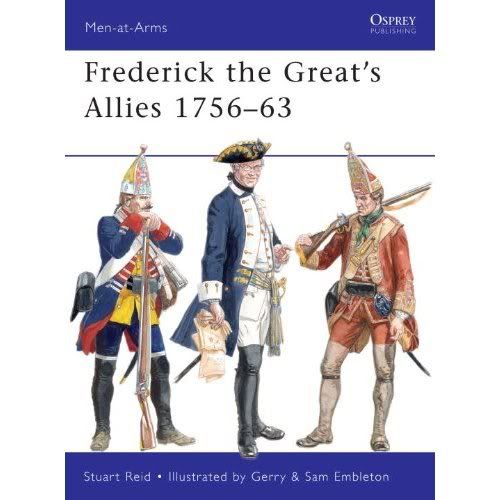
I picked this up in Manchester's Ian Allen Bookshop today and thought I'd write a little review based on my first impressions. I haven't read it cover-to-cover, but I have skimmed through it excitedly on the bus home and I am pretty pleased with it. My major worry was that the majority of the text would be devoted to a narrative of the campaign in the west, with only a few pages devoted to uniforms (like the last book of theirs that I bought on the Belgians in the Great War). I was pleasantly surprised when I found that only the first three pages focussed on the course of the campaign; the remaining 40-odd pages are devoted to the organisation and uniforms of His Britannic Majesty's Army in Germany.
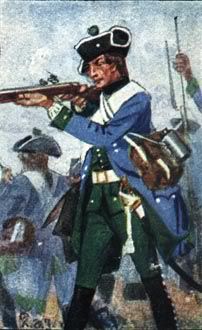
Stuart Reid divides the book into sections based not on nationality but, more usefully, arm-of-service (Cavalry, Infantry, Technical Troops and Light Troops) which allows him to give a useful introduction to the themes that apply to the troops of all contingents. Following on from this, each section is further divided by nation. The organisation and uniforms of each are explored with lists of facing colours provided for the larger contingents. From my (somewhat small) general knowledge of the period it appears that nothing is missed out and certain confusions could well have been solved, Frei-Regiment von Gerlach for example (see bottom). This main section of the text is illustrated throughout by annotated, black-and-white copies of the Knotel plates and the cigarette cards that can be found in colour on the internet. Reid seems to have made good use of primary source material and usually states where he has got his information, or which conflicting bit of info he has gone with and why (with the plate for the British 51st Regt being a good example, as it differs from what is often described).
The plates themselves are beautifully done, oozing in charm and character. Since the plates are often what we buy these books for I've included a list of what is covered, below. I think that the plate space is well used, with the contingents all getting at least some attention. Given the polygot nature of the Allied army in the west it is inevitable that the plates cannot fully cover all arms of service from every contingent, but the main text does not seem to leave anything out.
Plate A: Hanoverian Infantry (Grenadier, Fussgarde-Regiment 1757; Musketeer, Hardenberg 1759; Musketeer, Sachsen-Gotha 1759)
Plate B: Hanoverian Cavalry (Grenadier, Grenadieren zu Pferde; Cuirassier, Hodenburg; Prussian Dragoon, Nr. 9 Holstein-Gottorp)
Plate C: Light Cavalry (Prussian Hussar, Nr. 5 Reusch; Hanoverian Hussar, Luckner'scher Frei-Husaren 1757; Carabinier, Buckeburg contingent 1758)
Plate D: Hanoverian Light Troops (Mounted Jager, Freytag'scher Freikorps; Grenadier, Scheither'schen Freikorps; Musketeer, 1st Battalion Legion Britannique)
Plate E: British Contingent at Minden (Private, 51st Foot; Grenadier, 25th Foot; Trooper, 6th Dragoons)
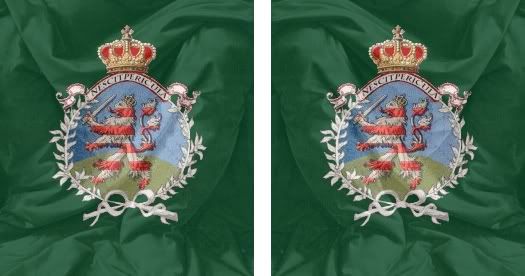
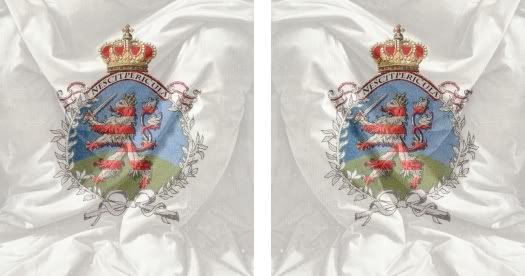
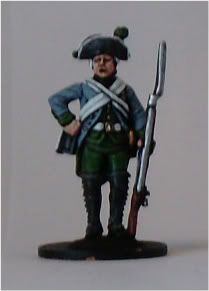
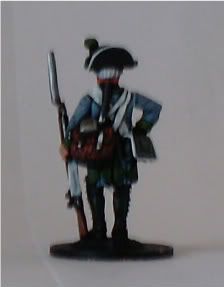
Plate F: Hesse-Kassel Contingent (Grenadier, Leibgarde zu Fuss 1760; Fusilier, Fusilier-Regt von Berthold 1760; Musketeer, Frei-Regiment von Gerlach)
Plate G: Brunswick Contingent (Hussar, Husarenkorps; Officer, von Imhoff; Dragoon, von Bibow)
Plate H: Technical Troops (Hanoverian Pontoonier; Hesse-Kassel Artilleryman; Scheither'scher Freikorps Artilleryman)
The reason I've included a full list of what is covered by the plates is that I have been dissappointed with the plates in some of the Men-at-Arms series in the past. Whole pages devoted to Guard kettledrummers in special parade dress and the like spring to mind. Or, more recently, a two page spread of Belgian soldiers assaulting a trench with absolutely no plate commentary at the back whatsoever. Frederick the Great's Allies hits the nail on the head, in my opinion. Every plate contains three uniforms that would have been seen on campaign, and every uniform has an informative commentary at the back.
Overall, I'm very happy with this book. I think Stuart Reid has done an admirable job of creating as full a breakdown of the organisation and uniforms of the army as is possible in the 48 pages allowed by the Men-at-Arms format. That he has done it in such a logically structured, engaging manner is all the more to his credit.
I don't pretend to be an expert in the field to any degree and if you have any thoughts on the book, or feel I haven't quite got this small review right, please feel free to add your comments below.
Frei-Regiment von Gerlach
I just thought I'd add a little tidbit of information I got from the book regarding this unit. I was asking on TMP about the unit a few months ago, and it seemed that it didn't show up in any Hessian OOBs and there was some doubt as to whether it existed altogether. Stuart Reid indicates that the unit began as Major Rall's battalion of Chasseurs, being first made up of contingents from various Hessian regiments in their original uniforms. These were then replaced by the uniform shown elsewhere in the blog. Unfortunately, Reid doesn't provide his source for this, though I attribute this more to the short format of the series not allowing for proper citations as opposed to any failings on his part. The fact that he goes to lengths to provide his sources throughout the book for any uniform-related choices (eg. British 51st Foot and Scheither Corps Artillery) makes me quite happy to accept his version of the history of the unit. Interestingly, the plate of Frei-Regiment von Gerlach has them depicted with lapels, as opposed to the version from the cigarette card. Perhaps the Pengel and Hurt version (which I haven't got) shows them with lapels?